Something I’ve been thinking about a lot is how little we accurately know of those whom we think we know best.
Or perhaps even more importantly those we don’t at all, yet presume we do (say, the person who California-rolled through a four way stop, or the person with ten boxes to ship at the Post Office).
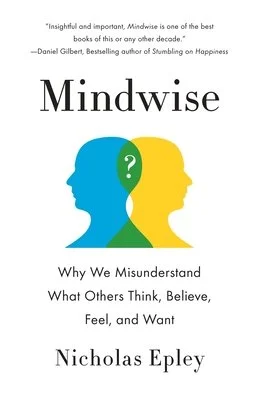
Well I read this book a year or two ago (bummer alert for all you researcher nerds: it was already old when I read it) and it was fascinating.
My primary takeaway as a clinician was an experiment he described wherein researchers had two people together-longtime spouses, I believe-and asked them a really innocuous question. I think it was like, favorite flavor of jelly or something, and asked them what they believed their spouse’s preference was, as well as their own confidence that they were correct.
(For instance, “she loves grape jelly, and I’m certain I'm right 10/10.)
Well, at the end of the day, as evidenced by that experiment and similar ones repeated over and over again, the phenomenon repeated that the level of confidence (10/10), far, far outnumbered what the correct answer about the person’s belief/preference/whatever actually in reality was.
Translation: we mostly exist in a world where we are very confident about things people are thinking, or deeply believe, and we are entirely wrong. Even people we know really, really well. The author pointed out that statistically our chances of being correct, with the level of certainty of our spouses above, are about on par with flipping a coin statistically. A fifty fifty chance we’re wrong in what we’re certain that another person is thinking.
Pretty humbling thought for a Friday night.
Hopefully.